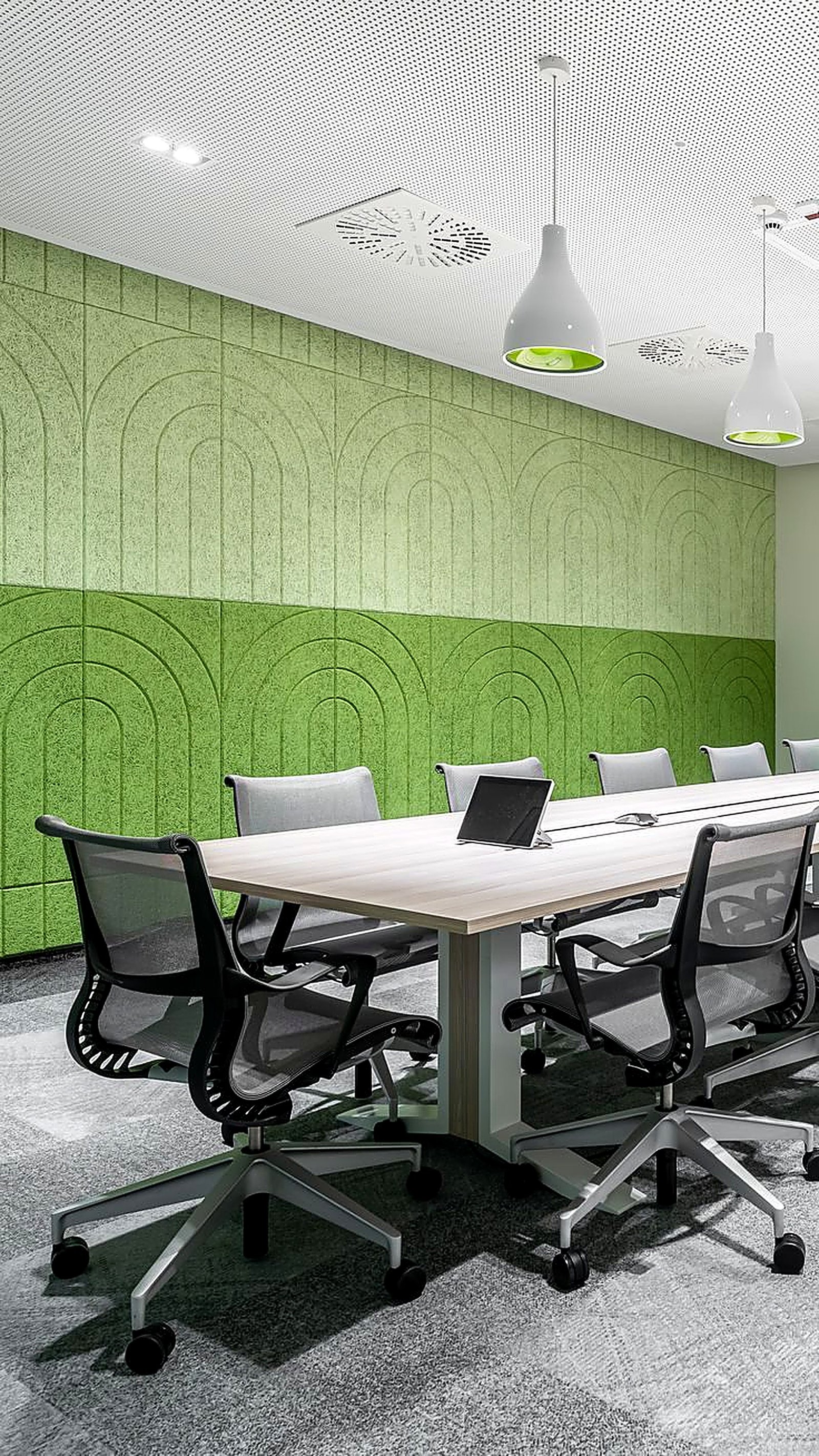
Walk into almost any new office, school or café in India and you will find the same problem: glass, concrete and hard flooring that bounce every voice around the room. PET acoustic panels have become the most popular fix, because they absorb that noise while adding colour and pattern to the space. This guide covers everything you need to choose the right panel: how they work, 9 mm vs 12 mm, NRC, fire safety, carved and ceiling options, and the factors behind PET acoustic panel price in India.
What are PET acoustic panels?
PET acoustic panels are rigid boards made from polyester fibre. The fibres are produced by recycling PET bottles: the bottles are collected, cleaned, chipped into pellets, melted, spun into fine fibres and finally compressed into panels. The result is a lightweight, porous board that soaks up sound energy instead of reflecting it.
Because the colour runs all the way through the fibre, the panels can be cut, grooved and CNC-carved without exposing a different core. That is why polyester acoustic panels are now used as much for interior design as for noise control.
How do sound absorbing panels actually work?
Sound reflecting off hard surfaces lingers in a room. This lingering sound, called reverberation, is what makes a space feel echoey and loud. When sound waves enter the open structure of a PET panel, they lose energy as friction between the fibres, and much less bounces back. You get shorter echo, clearer speech and a calmer room.
Office conversation sits mostly in the mid frequencies, roughly 300 Hz to 3,000 Hz, where vowels and consonants live. That is exactly the range where sound absorbing panels like PET perform best. If you want a deeper look at fixing noisy workspaces, read our guide on how to reduce noise in an open office with acoustic wall panels.
Key benefits of PET acoustic panels
9 mm vs 12 mm PET panels: which thickness should you choose?
Bollard manufactures PET acoustic panels in 9 mm and 12 mm thicknesses. Thicker panels absorb more sound, especially the lower tones of the human voice, so the choice depends on how loud the space is and how much wall you can treat.
| Thickness | Best for | Why |
|---|---|---|
| 9 mm | Feature walls, cabins, reception backdrops, lighter-noise zones | Lighter and easier to carve into detailed patterns |
| 12 mm | Conference rooms, open offices, classrooms, training rooms, cafeterias | More absorption for busy, speech-heavy spaces |
A useful tip: mounting panels with a small air gap behind them improves absorption further, without changing the panel itself.
Understanding NRC for acoustic panels
NRC (Noise Reduction Coefficient) is a number from 0 to 1 that shows how much sound a material absorbs. Glass and concrete sit close to 0, while good acoustic materials sit well above 0.5. As a general guide:
| NRC range | What it means | Typical use |
|---|---|---|
| 0.0 to 0.2 | Highly reflective | Glass, concrete, plaster, tiles |
| 0.3 to 0.5 | Light absorption | Carpet, curtains, soft furnishing |
| 0.6 to 0.8 | Good absorption | Offices, cabins, classrooms, retail |
| 0.8 to 1.0 | Very high absorption | Auditoriums, conference rooms, call centres |
NRC is only part of the story. Thickness, mounting method and how much of the room you cover all change the real result. For very loud environments that need heavy dampening, our Phonic Fiber wall and ceiling systems reach an NRC of up to 0.9.
Carved acoustic panels: where design meets acoustics
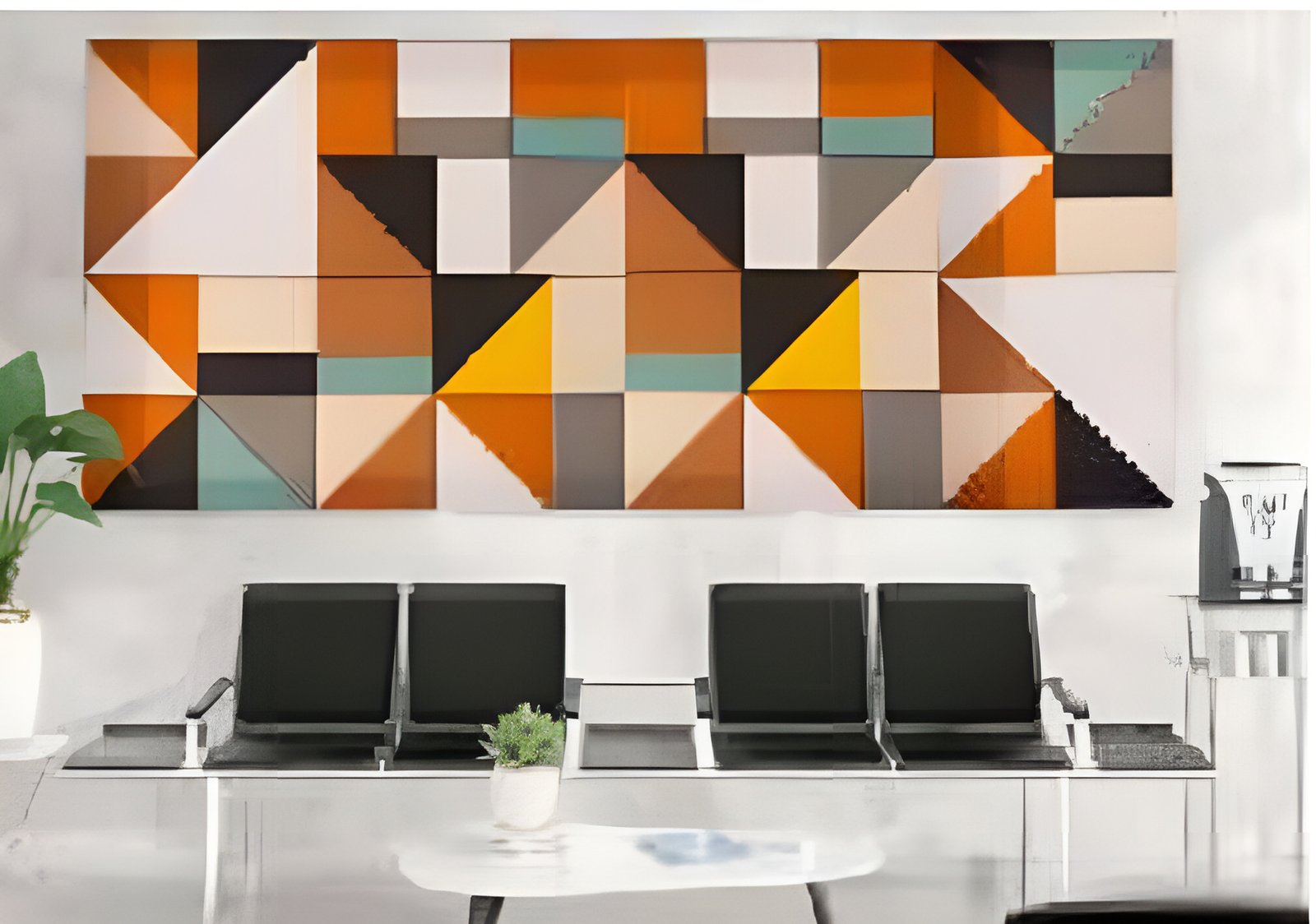
Using advanced CNC cutting, PET sheets can be carved into arches, waves, chevrons, geometric grids and custom brand patterns. Carved acoustic panels give you a statement wall that still absorbs sound, which makes them a favourite for receptions, CEO cabins, experience centres, hotels and cafés.
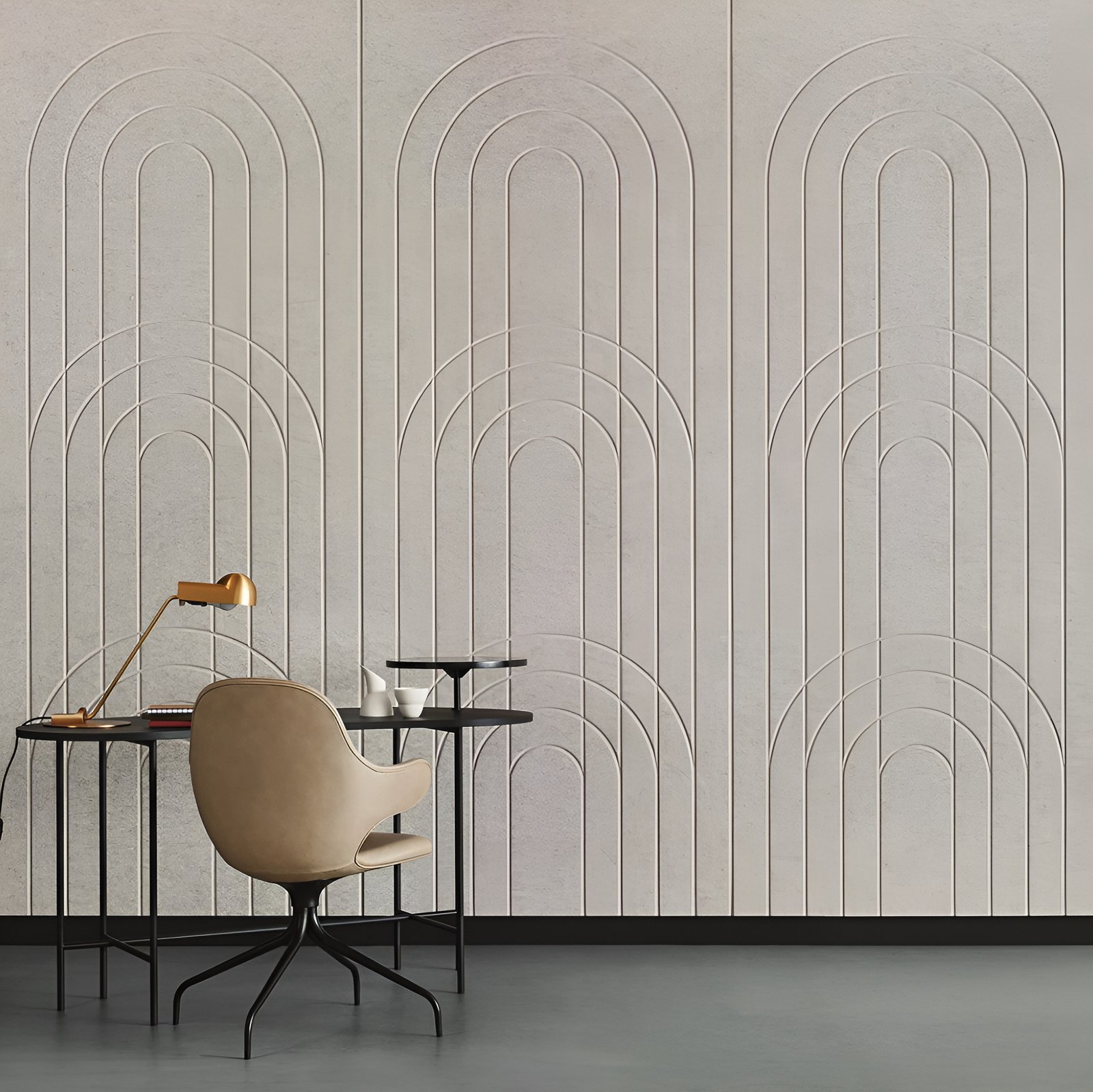
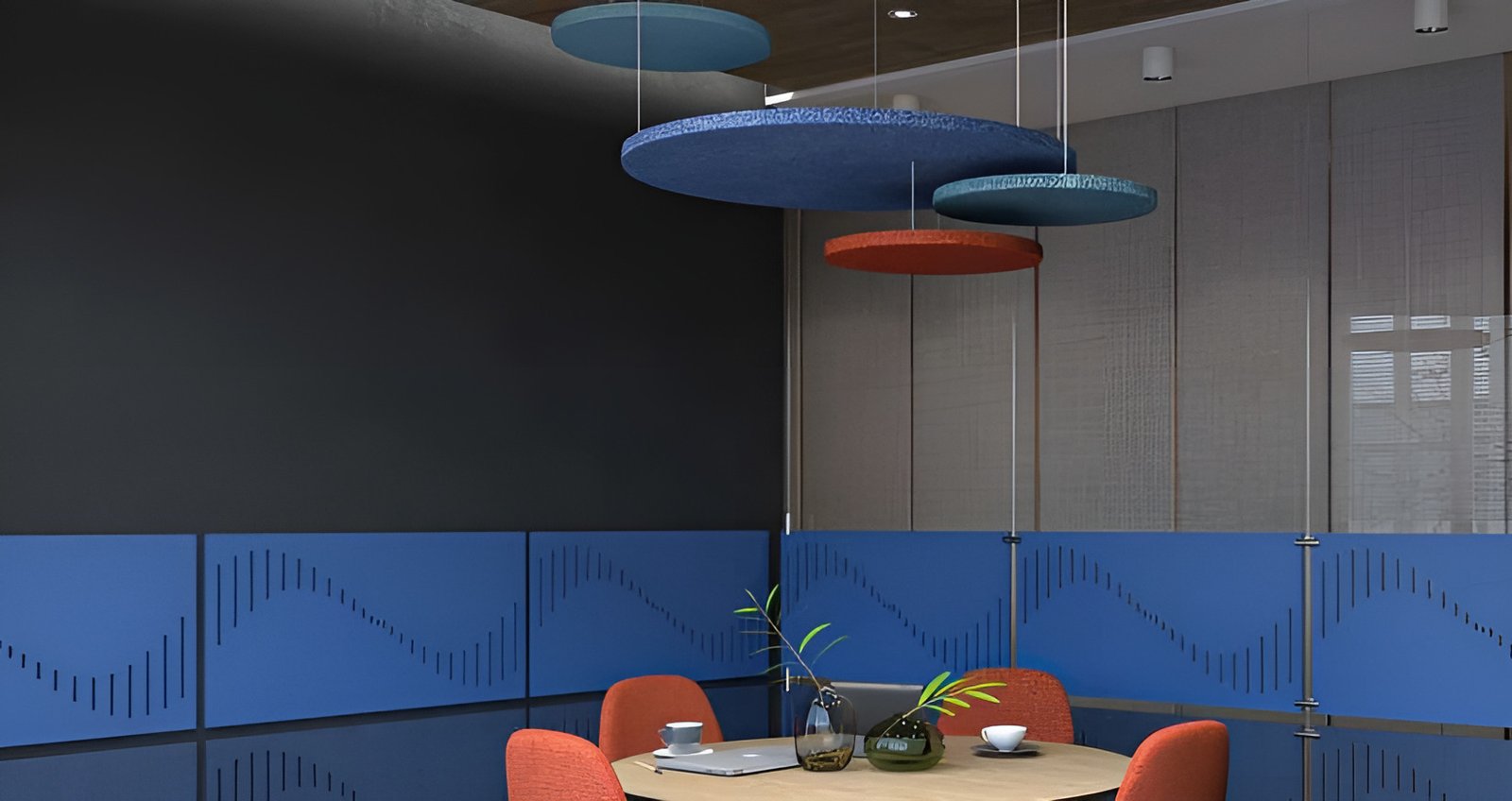
Because patterns are cut by machine, there are practically no design limits: specific shapes, sizes and patterns can be made to match the architect's drawing. See the full range on our PET acoustic panels page.
PET acoustic ceiling panels, baffles and clouds
Walls are only half the room. In large open floors, the ceiling is usually the biggest untreated surface, and treating it delivers the biggest improvement. PET is also made into acoustic ceiling elements:
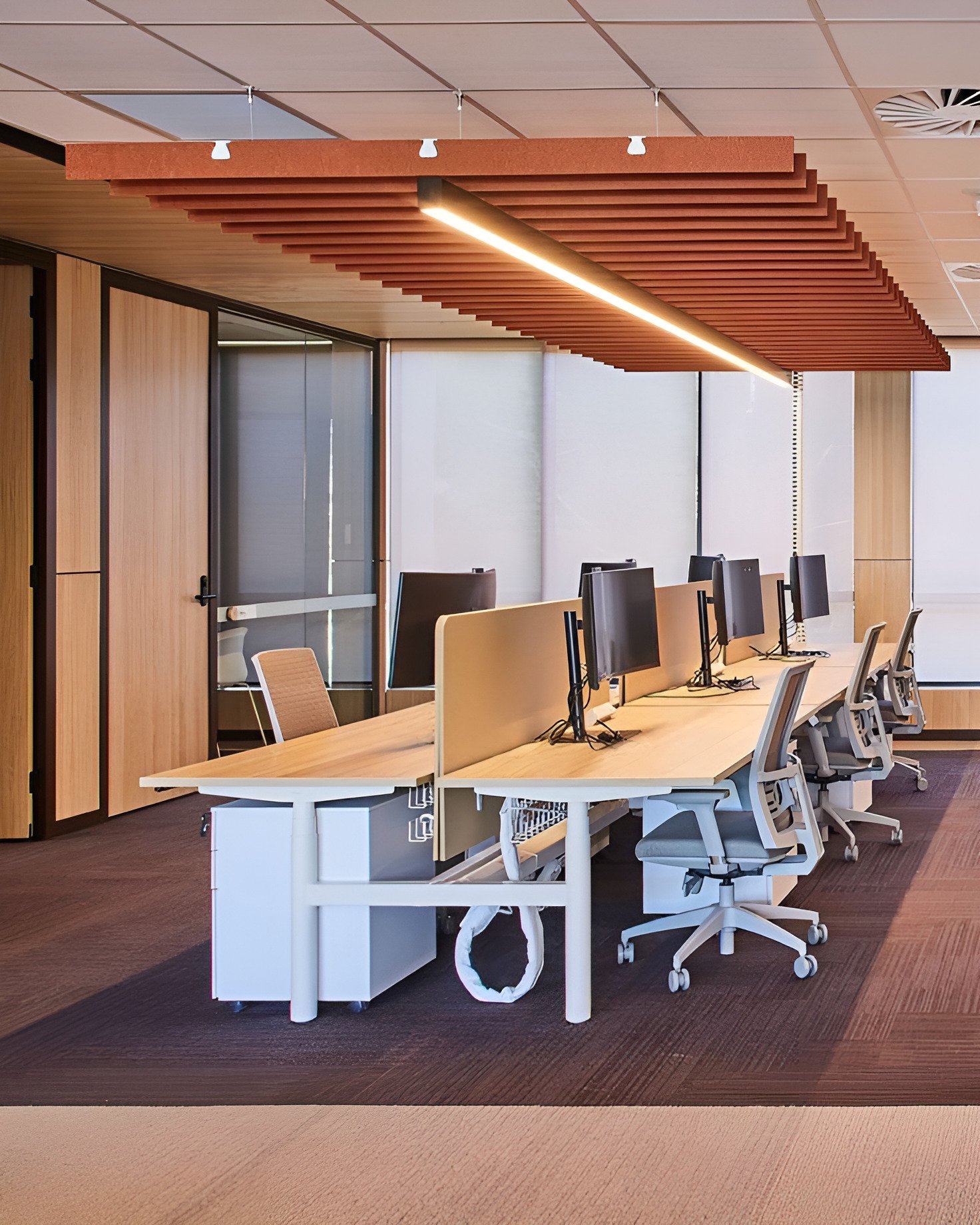
- Baffles: vertical PET blades hung in rows, ideal above workstations and corridors.
- Clouds: suspended circles, hexagons and triangles that float below the slab.
- Grid and lattice forms: open patterns that keep services and lighting accessible.
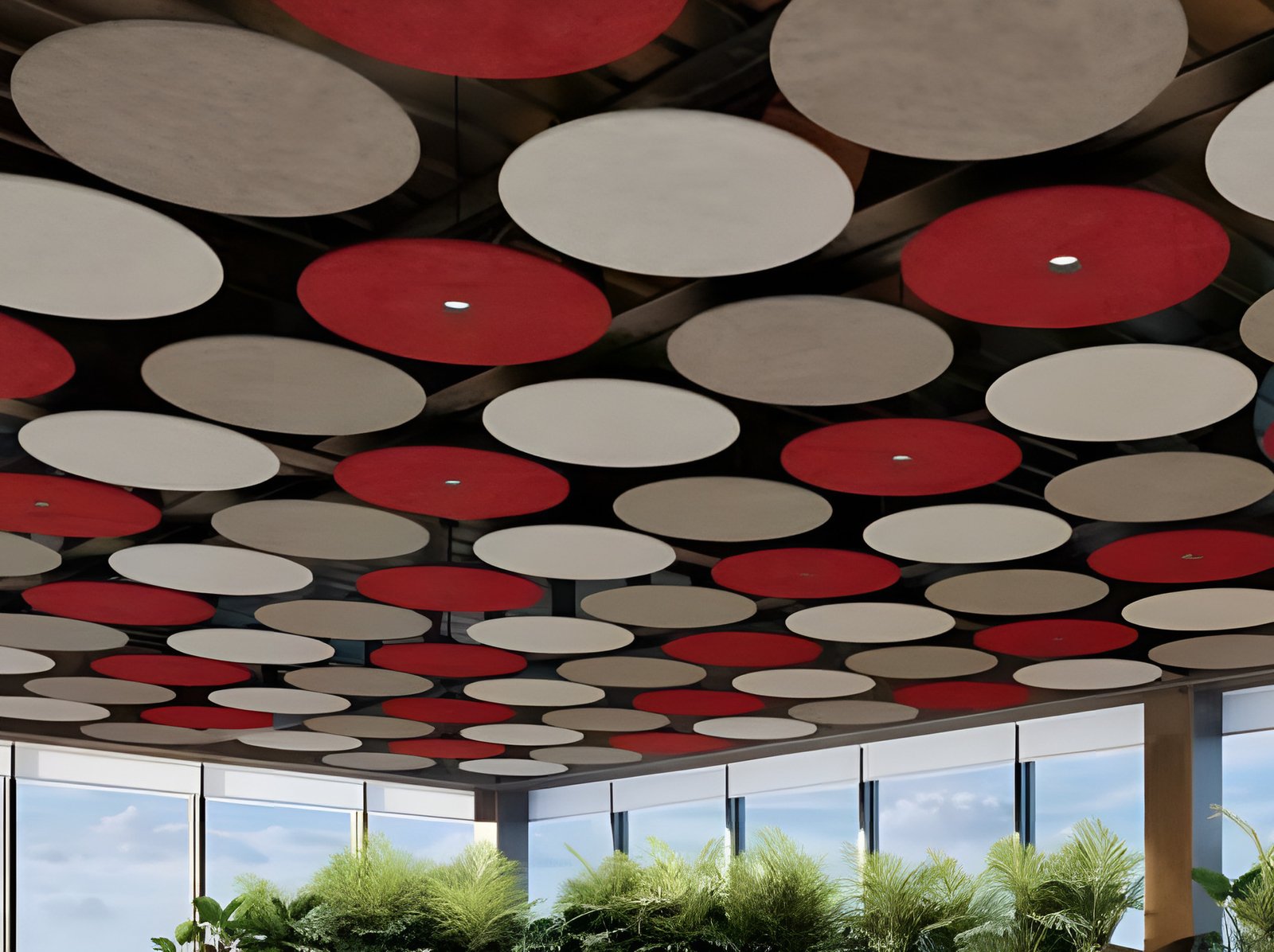
For a full comparison of ceiling options, from mineral fibre tiles to metal and wood, read our acoustic ceiling panels guide. If you prefer linear metal or wood lines overhead, explore our baffle ceiling systems.
Where to use PET acoustic panels
Placement matters as much as the product. In meeting rooms, treat the wall opposite the screen and side walls at seated head height. In open offices, start with the ceiling, then columns and end walls. In cabins, one panel behind the desk and one opposite stops the flutter echo between parallel walls.
PET panels vs other acoustic materials
| Material | Look | Best suited to |
|---|---|---|
| PET Panels | Solid colours, carved patterns | Offices, education, hospitality feature walls and ceilings |
| Wood Wool | Natural textured wood fibre | Lobbies, cafés, eco-focused and fire-sensitive projects |
| Wood Works | Warm woodgrain, 76 laminate finishes | Boardrooms, lounges, premium interiors |
| Phonic Fiber | Soft fabric-faced finish | Very loud halls needing heavy dampening, up to NRC 0.9 |
| Mineral Fiber Tiles | Classic ceiling tile | Large-area ceilings in offices and classrooms |
PET acoustic panel price in India: what affects the cost?
Search for acoustic panel price per sq ft and you will see very different numbers. That is because the final cost of a PET project depends on several factors:
- Thickness: 12 mm panels cost more than 9 mm but absorb more.
- Design: plain sheets vs CNC-carved patterns or custom ceiling shapes.
- Area and quantity: larger projects get better rates per square foot.
- Installation: direct wall fixing vs framed, suspended or air-gap mounting.
- Lead time: buying from the manufacturer avoids long waits and middle margins.
Bollard manufactures in-house at a fully automated 1.5 lakh sq. ft. facility in Bahadurgarh, Haryana. High-capacity production means faster delivery and total customisation, with support from acoustic calculation to site handover. Find a partner near you on our dealers page.
Installation and maintenance tips
- Install panels on clean, dry, level surfaces, or on a frame where an air gap is planned.
- Dust regularly with a soft brush or the brush head of a vacuum cleaner.
- Blot stains as early as possible; avoid soaking the panel.
- Plan cut-outs for switches, sockets and lights before installation.
Frequently asked questions
Are PET acoustic panels good for offices?
Yes. They absorb speech frequencies well, reduce echo in meeting rooms and open floors, are flame retardant and come in many colours, which is why they are among the most specified acoustic panels for offices in India.
Which is better, 9 mm or 12 mm PET panels?
12 mm absorbs more and suits meeting rooms, open offices and classrooms. 9 mm works well for feature walls, cabins, carved designs and lighter-noise areas.
Are PET acoustic panels fire retardant?
Bollard PET panels are flame retardant and resistant to humidity and moisture, making them suitable for commercial and institutional interiors.
Are PET acoustic panels eco-friendly?
Yes. They are made from polyester fibre produced by recycling PET bottles, which are cleaned, pelletised, melted and spun into fibre.
How many colours are available?
The Bollard PET range is available in 48 shades, from Snow White and Pearl White to Teal, Kelp Forest, Dark Red and Deep Blue.
What is the price of PET acoustic panels in India?
It depends on thickness, carving or custom shapes, total area and installation method. Share your room size or drawings with Bollard for an exact quote.
Planning a quieter, better-looking space?
Share your layout and our team will recommend the right panels, thickness, colours and quantity for your project.