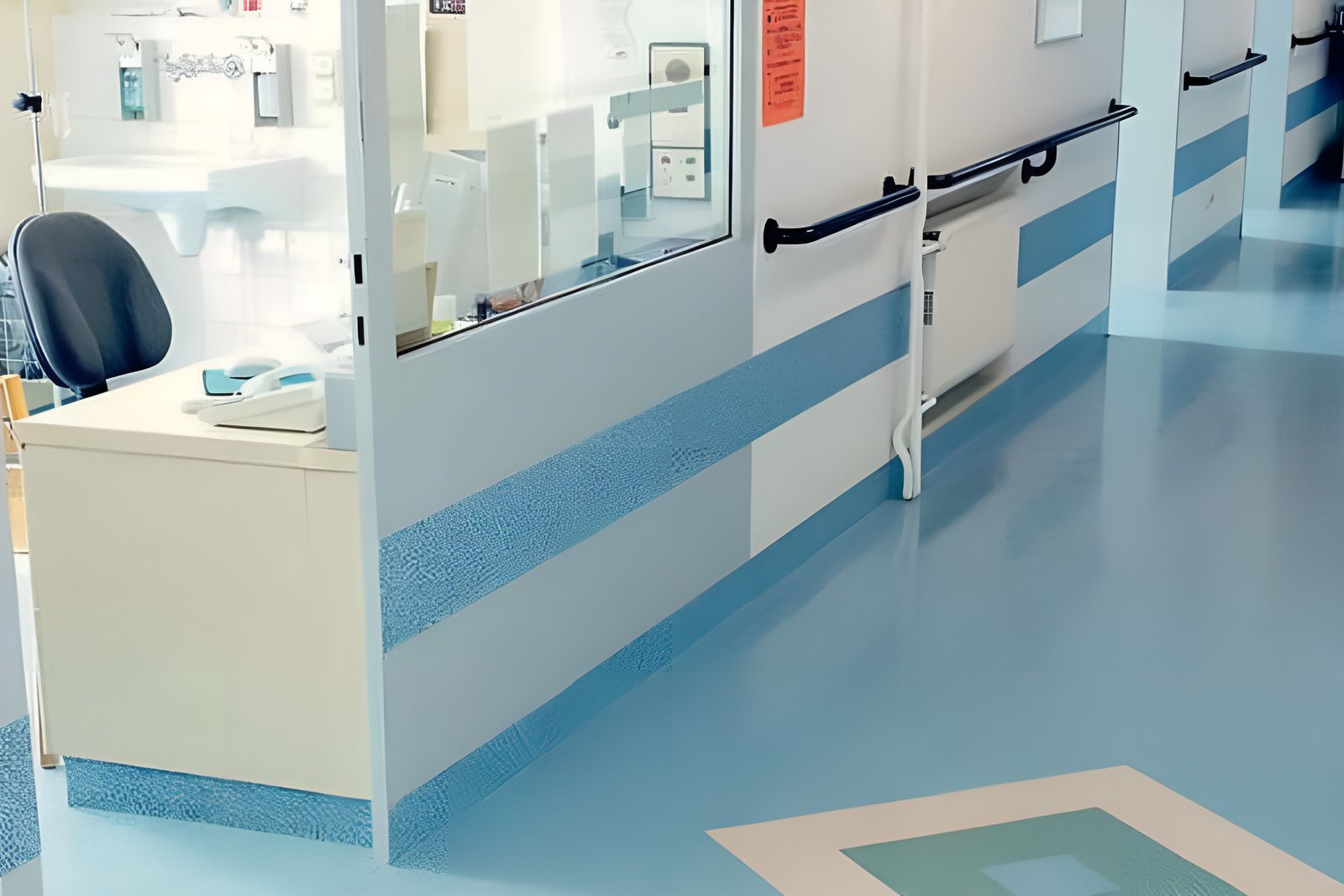
Walk into a modern hospital, clinic or school and look down. The floor is usually smooth, seamless and slightly cushioned, with no grout lines to trap dirt. That is almost always vinyl flooring, and in healthcare the grade that matters most is homogeneous vinyl flooring. This guide explains how it differs from other floors, how to choose between hospital, anti-static and conductive options, what vinyl flooring price in India looks like, and what to ask your supplier.
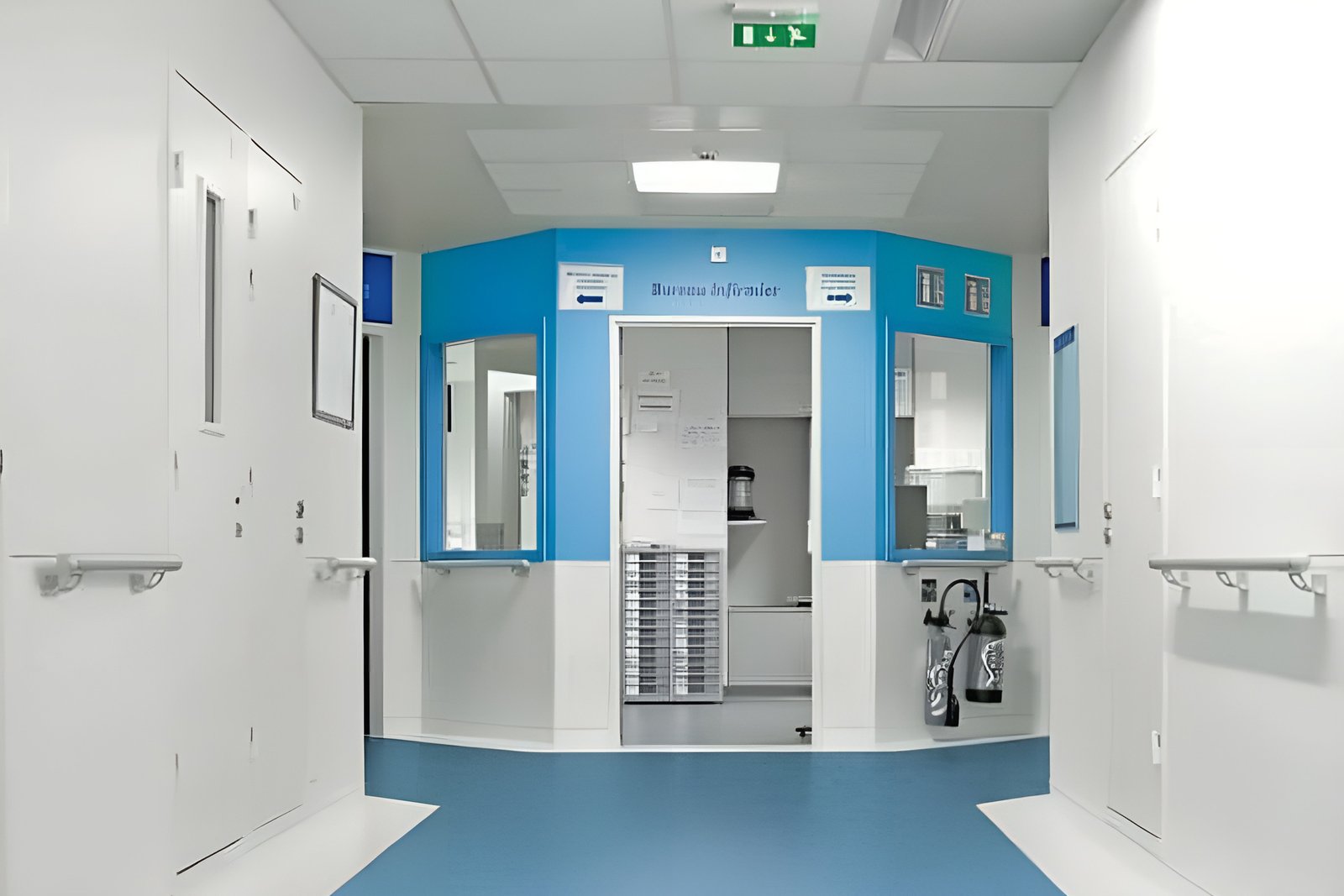
What is homogeneous vinyl flooring?
Homogeneous vinyl is a flooring sheet made of one solid layer of PVC, with the same colour and pattern running through its full thickness. Because the pattern is not just printed on the surface, it does not wear away under constant trolleys, footfall and cleaning. It is supplied in rolls, so a large room can be covered with very few joins.
Sheet vinyl comes in continuous rolls, is glued down, and is usually the most economical vinyl format, which is why roll flooring is so common in public buildings. For hospitals and labs, the joins are also heat-welded, which makes the surface jointless and hygienic. Bollard makes this type of floor as its Safety homogeneous vinyl range, engineered for healthcare, retail and education interiors.
Why hospitals and clinics choose vinyl
Healthcare floors work harder than almost any other. They must be cleaned often, carry heavy beds and equipment, stay safe when wet and stay quiet for patients. Vinyl handles all of these together:
- Hygiene: a smooth, seamless surface leaves few places for dirt and germs to collect, and it is quick to mop.
- Slip resistance: a textured surface that keeps footing safe for patients, visitors and staff.
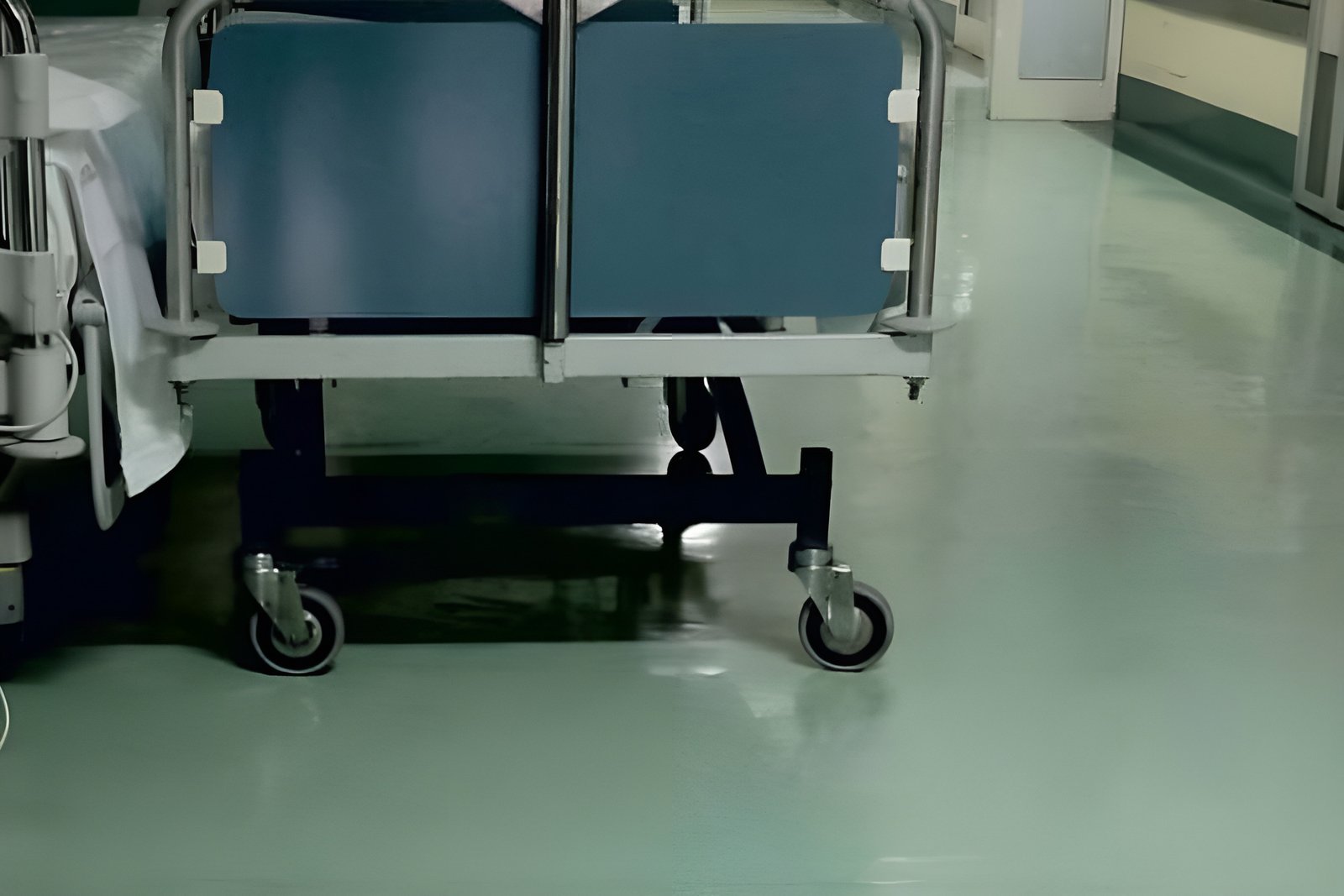
- Heavy rolling loads: beds, trolleys and wheelchairs roll across it without damaging it.
- Comfort and quiet: a slightly resilient floor is kinder underfoot than stone or tile and reduces impact noise.
- Fire safety: certified fire performance is essential for any public building.

Sheet, tiles, LVT and SPC: which vinyl is which?
"Vinyl" covers several products, and the confusion between them causes many wrong purchases. Here is the simple version:
| Type | Format | Best used for |
|---|---|---|
| Homogeneous sheet vinyl | Rolls, solid colour through the thickness | Hospitals, clinics, labs, schools, busy corridors |
| Heterogeneous sheet vinyl | Rolls with a printed layer over a backing | Offices, retail, lighter commercial use |
| Vinyl tiles and planks (LVT) | Squares or planks, glued or peel-and-stick | Wood-look flooring in offices, homes and shops |
| SPC and WPC planks | Rigid click-together planks | Residential and light commercial wood-look floors |
For a wood-look floor in offices and hospitality, see Bollard's Sapphire Wood flooring. For clinical and high-traffic spaces, homogeneous sheet is the standard choice, and it is the focus of this guide. You can browse the full Bollard flooring collection to compare.
Meditech and Conductive: two grades for two jobs
Not every healthcare room needs the same floor. Bollard's Safety range comes in two grades, both 2 mm thick, supplied in rolls 2 metres wide and 20 metres long.
- Meditech: the all-round hospital floor for wards, corridors, patient rooms, clinics and consulting rooms. It is anti-static, slip resistant and built for continuous use with bed and chair castors.
- Conductive: a specialist grade for areas where static electricity must be controlled, such as operation theatres, ICUs, labs and rooms with sensitive electronic equipment.
Key specifications at a glance
These figures are taken from the Bollard Safety vinyl brochure. Always ask for the test report for your project.
| Property | Meditech | Conductive |
|---|---|---|
| Total thickness | 2.0 mm | 2.0 mm |
| Roll size | 2 m x 20 m | 2 m x 20 m |
| Weight | 2900 g/m2 | 3000 g/m2 |
| Fire classification (ISO 13501-1) | Class Bfl-s1 | Class Bfl-s1 |
| Anti-slip (DIN 51130) | R9 | R9 |
| Anti-static (EN 1815) | Below 2 kV | Below 2 kV |
| Electrical resistance, ground (EN 1081) | Not applicable | 104 to 106 ohm |
| Castor chair suitability (EN 425) | Suitable for continuous use | Suitable for continuous use |
| Sound insulation improvement (EN ISO 717-3) | 3 dB | 4 dB |
| Colours | BLD-101 to BLD-108 | BLD-109 and BLD-110 |
The surface is also recyclable, resistant to acids, alkalis and stains, elastic underfoot and shows low indentation from rolling and static loads.
Which floor for which room?
| Space | What the floor must do | Suggested option |
|---|---|---|
| Wards, corridors, patient rooms | Hygiene, bed traffic, slip safety | Meditech homogeneous vinyl |
| Operation theatres, ICUs, labs | Static control, easy cleaning | Conductive homogeneous vinyl |
| Clinics and diagnostic centres | Seamless, easy to clean | Meditech homogeneous vinyl |
| Schools and classrooms | Heavy footfall, low maintenance, quiet | Homogeneous vinyl in lighter shades |
| Retail and public corridors | Durability, easy upkeep | Homogeneous vinyl |
| Offices and lounges | Warm, wood-look finish | Sapphire Wood |
Vinyl flooring price in India: what should you expect?
Prices vary a great deal by type and grade, so a single "per square foot" number can mislead. Trade listings give a rough picture of the market.
- Vinyl tiles: basic tiles are listed from roughly ₹40 to ₹45 per sq ft.
- Standard sheet vinyl: material is often quoted around ₹50 to ₹150 per sq ft, depending on thickness and wear layer.
- 2 mm hospital-grade homogeneous vinyl: listings commonly sit between about ₹140 and ₹200 per sq ft, with conductive and anti-static grades at the upper end.
When you compare quotes, check that every supplier is pricing the same thickness, the same fire and slip ratings, and whether installation and heat-welding are included.
Installation and care: what makes the floor last
- Prepare the subfloor. It must be level, dry and clean. Vinyl shows every bump beneath it.
- Let the rolls acclimatise. Keep them in the room for the recommended time before laying.
- Glue down and weld the joins. Heat-welding seals the seams in clinical areas.
- Coving at the walls. Curving the floor up the wall removes the corner where dirt gathers.
- Clean routinely. Regular damp mopping with a suitable cleaner keeps the surface hygienic and bright.
- Protect from heavy point loads. Use proper castors and avoid dragging sharp-edged equipment.
Pair the floor with the right ceiling and acoustics
A hospital or school is judged by how clean and calm it feels, and the floor is only one surface. Vinyl already improves sound insulation slightly, but hard walls and ceilings still carry noise down long corridors.
- For classrooms and corporate floors, Sandune mineral fibre tiles add acoustic insulation and fire resistance overhead.
- For clean, wipe-down ceilings in healthcare areas, look at Bollard metal tiles, including the biosafe option.
- To understand your options, read our acoustic ceiling panels guide.
Why source from Bollard
Bollard manufactures in a fully automated 1.5 lakh sq. ft. facility in Bahadurgarh, Haryana, and supports projects across India from its Delhi head office and Lucknow branch. As an ISO 9001:2015 compliant organisation, we work with architects and project teams from specification to handover. See our certificates or find a partner near you on the dealers page.
Frequently asked questions
What is homogeneous vinyl flooring?
Homogeneous vinyl flooring is a single solid layer of PVC where the colour and pattern run through the full thickness. It resists wear, is easy to clean and is supplied in rolls with few joins, which is why it is widely used in hospitals, clinics, labs and schools.
Which flooring is best for hospitals in India?
Homogeneous vinyl sheet is a leading choice because it is seamless, hygienic, slip resistant and handles bed and trolley traffic. Use an anti-static grade for general hospital areas and a conductive grade for operation theatres, ICUs and labs.
What is the difference between Meditech and Conductive vinyl?
Both are 2 mm homogeneous vinyl. Meditech is the general anti-static hospital floor. Conductive is designed for rooms where static electricity must be controlled, such as operation theatres and rooms with sensitive equipment.
What is the price of vinyl flooring per sq ft in India?
It depends on the type. Basic vinyl tiles start from around ₹40 to ₹45 per sq ft in trade listings, while 2 mm hospital-grade homogeneous vinyl is commonly listed around ₹140 to ₹200 per sq ft. Exact cost depends on grade, quantity and installation, so request a quotation.
Is vinyl flooring slip resistant?
Hospital-grade vinyl is made with a textured surface for safe footing. Bollard Safety vinyl is rated R9 on the DIN 51130 slip test.
Can I use vinyl flooring in schools and offices?
Yes. Homogeneous vinyl suits schools and busy commercial corridors, while wood-look vinyl such as Sapphire Wood suits offices and lounges.
Planning a hospital, clinic or school floor?
Share your area and drawings and our team will recommend the right grade, colours and quantity for your project.