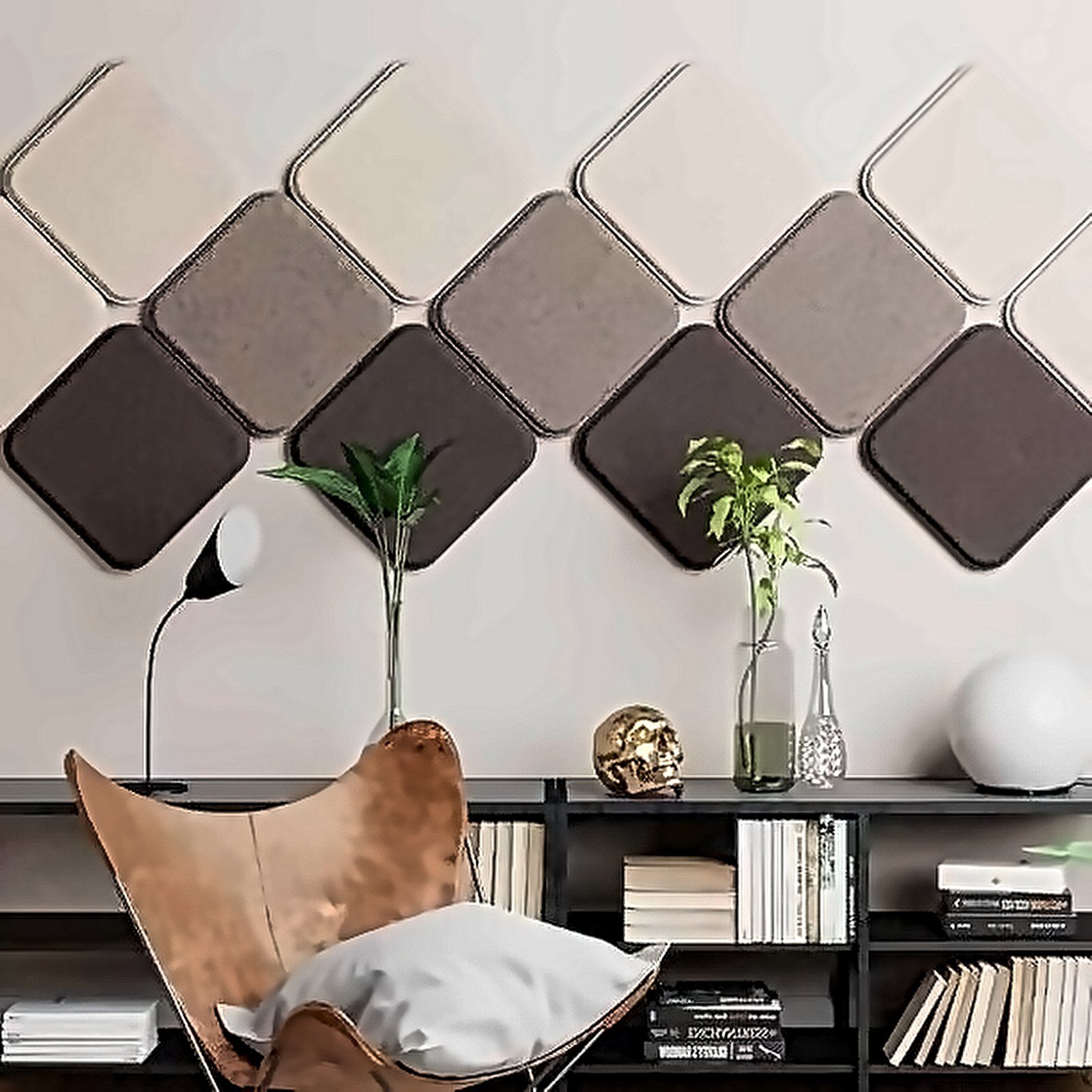
Wood makes a room feel warm, calm and expensive. The problem is that a plain timber wall does very little for sound, so boardrooms, auditoriums and lounges can look wonderful and still be echoey. Wooden acoustic panels solve both problems at once: the face is a real wood-look laminate, while grooves or perforations backed by an absorbent layer take the echo out of the room. This guide explains how wooden wall panels and wooden ceilings work, the sizes, NRC and finishes to choose, and where to use them.
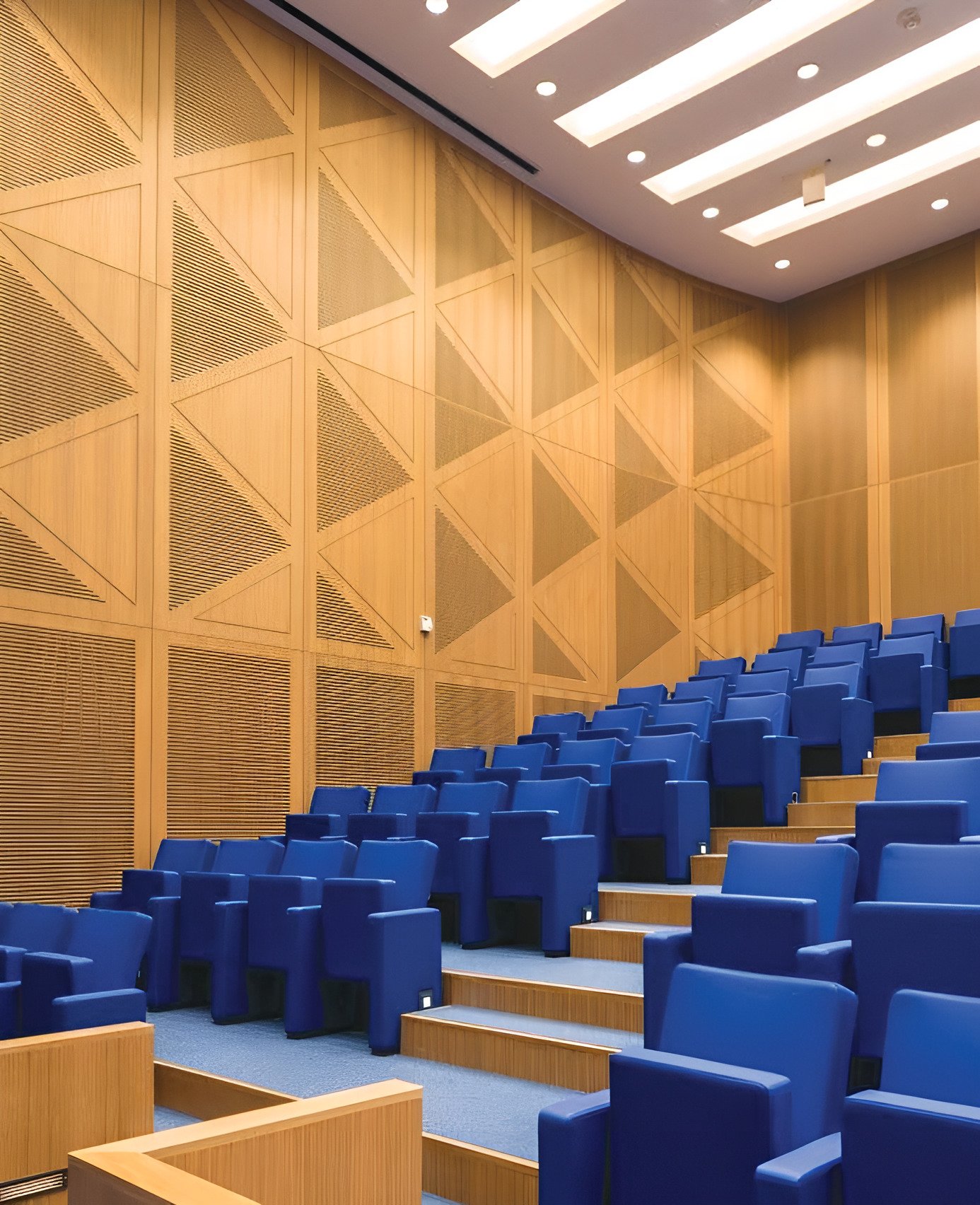
What are wooden acoustic panels?
Wooden acoustic panels are wall or ceiling boards finished in wood-look laminate, with slots, grooves or tiny perforations that let sound pass into an absorbent layer behind the face. Sound that would normally bounce off a hard surface is trapped instead, so the room stops sounding hollow.
That is the key difference from ordinary timber cladding. Plain wood reflects sound, much like plaster. An acoustic wood panel is designed to absorb it, which is why the same material can look like fine joinery and still behave like an acoustic treatment. Bollard's range of Wood Works wall and ceiling systems is built on this idea, and it is designed to solve the common architectural problem of echoey rooms.
How do wooden panels reduce echo?
Echo, or reverberation, is sound reflecting repeatedly between hard surfaces. A wooden acoustic system breaks that cycle in three ways:
- Openings in the face: grooves between channeled slats, or 2 mm, 4 mm and 6 mm perforations in tiles, let sound waves travel inside the panel instead of bouncing off.
- Absorbent backing: the sound energy is converted to heat as it moves through the porous layer behind the wood face.
- Air gap and fill: a cavity behind the panel, ideally with glass wool, absorbs even more, especially lower tones.
Two ways to build it: channeled panels and perforated tiles
Bollard's Wood Works range comes in two main formats for both walls and ceilings. Both are finished in laminate and share the same fire classification, so the choice is about look and layout.
| Feature | Channeled wood works | Wall and ceiling tiles |
|---|---|---|
| Look | Linear slats with fine grooves | Flat, clean tile faces with perforation |
| Wall system | Aluminium keel profile | Concealed fixing |
| Ceiling system | 24 mm grid frame | Concealed fixing |
| Size | 192 x 2440 x 15 mm, or custom | 600 x 600 mm or 300 x 1200 mm |
| Edge detail | Tongue and groove | Groove |
| Pattern | G13, G21, G28 or custom | 2 mm, 4 mm or 6 mm perforation |
| NRC | 0.6, or 0.85 with 50 mm glass wool | 0.6 |
Channeled panels suit long, continuous walls and statement ceilings where you want strong linear lines. Perforated tiles suit rooms that need an even, formal finish, such as meeting rooms and banks. Both are made to size, so custom lengths and layouts are possible.
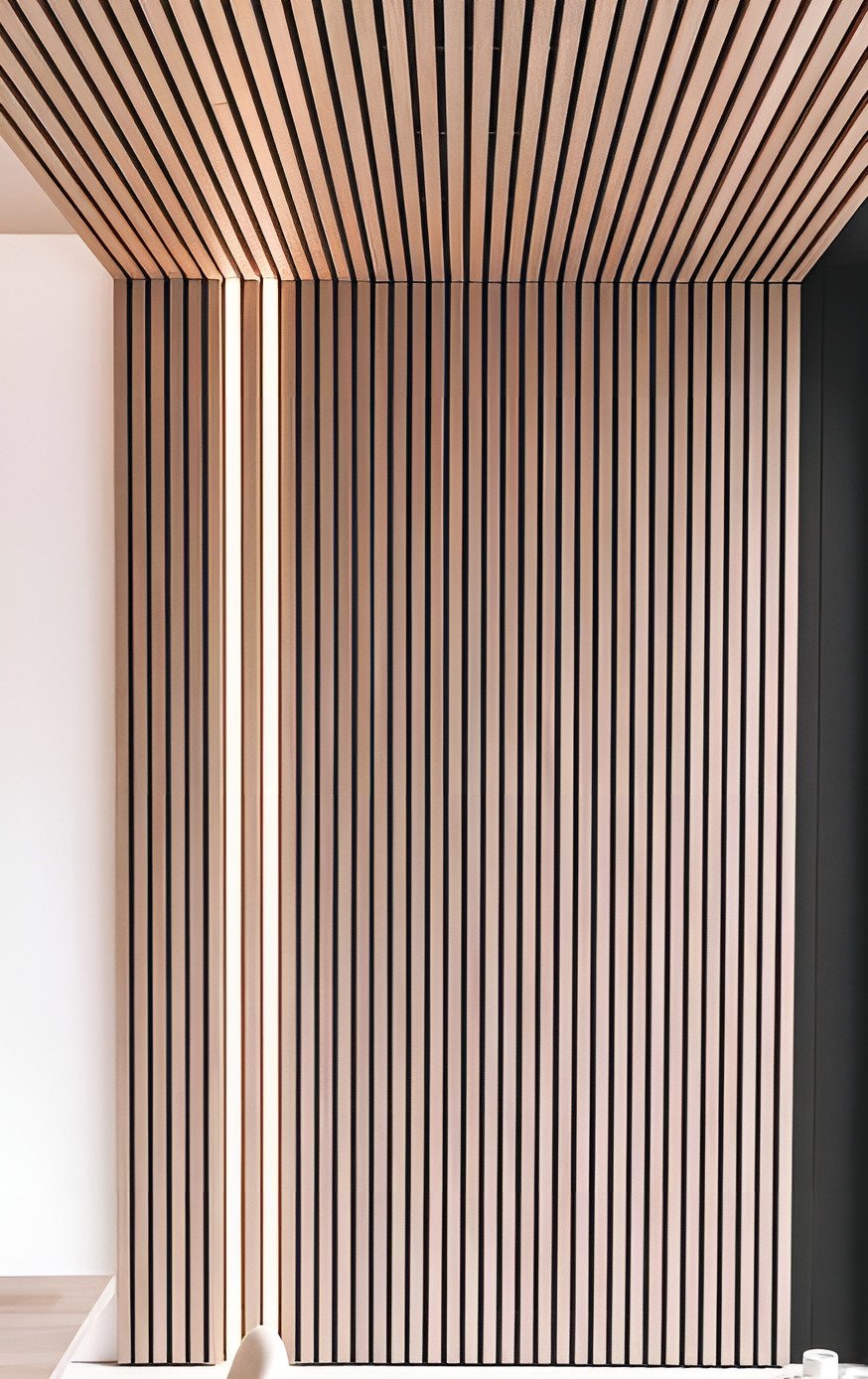
NRC for wooden acoustic panels
NRC (Noise Reduction Coefficient) runs from 0 to 1 and shows how much sound a material absorbs. Bollard wooden panels are rated at NRC 0.6, which is good absorption for offices, cabins and classrooms. The channeled wooden system can reach NRC 0.85 when 50 mm glass wool is added behind it, which is the level you want for auditoriums, conference rooms and other speech-critical spaces.
| Build | NRC | Good for |
|---|---|---|
| Wooden panel or tile, standard | 0.6 | Offices, reception areas, lounges, cabins |
| Channeled wood works with 50 mm glass wool | 0.85 | Auditoriums, boardrooms, training halls |
If you need the very highest absorption for loud halls, compare these with our Phonic Fiber systems, which reach an NRC of up to 0.9. For a lighter, colourful alternative on walls, see our PET acoustic panels guide.
Finishes and laminate options
The face of the panel is a laminate, so you are choosing a surface finish, not a veneer species. The brochure colour range includes Khaya Mahogany, Bavarian Beech, Fusion Maple and a wooden shade option, and the wider Wood Works range offers over 76 laminate finishes, from natural woodgrains to solid colours.
As a simple rule, lighter woods such as beech and maple make a room feel open and modern, while deeper tones like mahogany suit executive cabins, libraries and hospitality interiors. Laminate also resists everyday wear, which makes it a practical choice for busy commercial spaces.
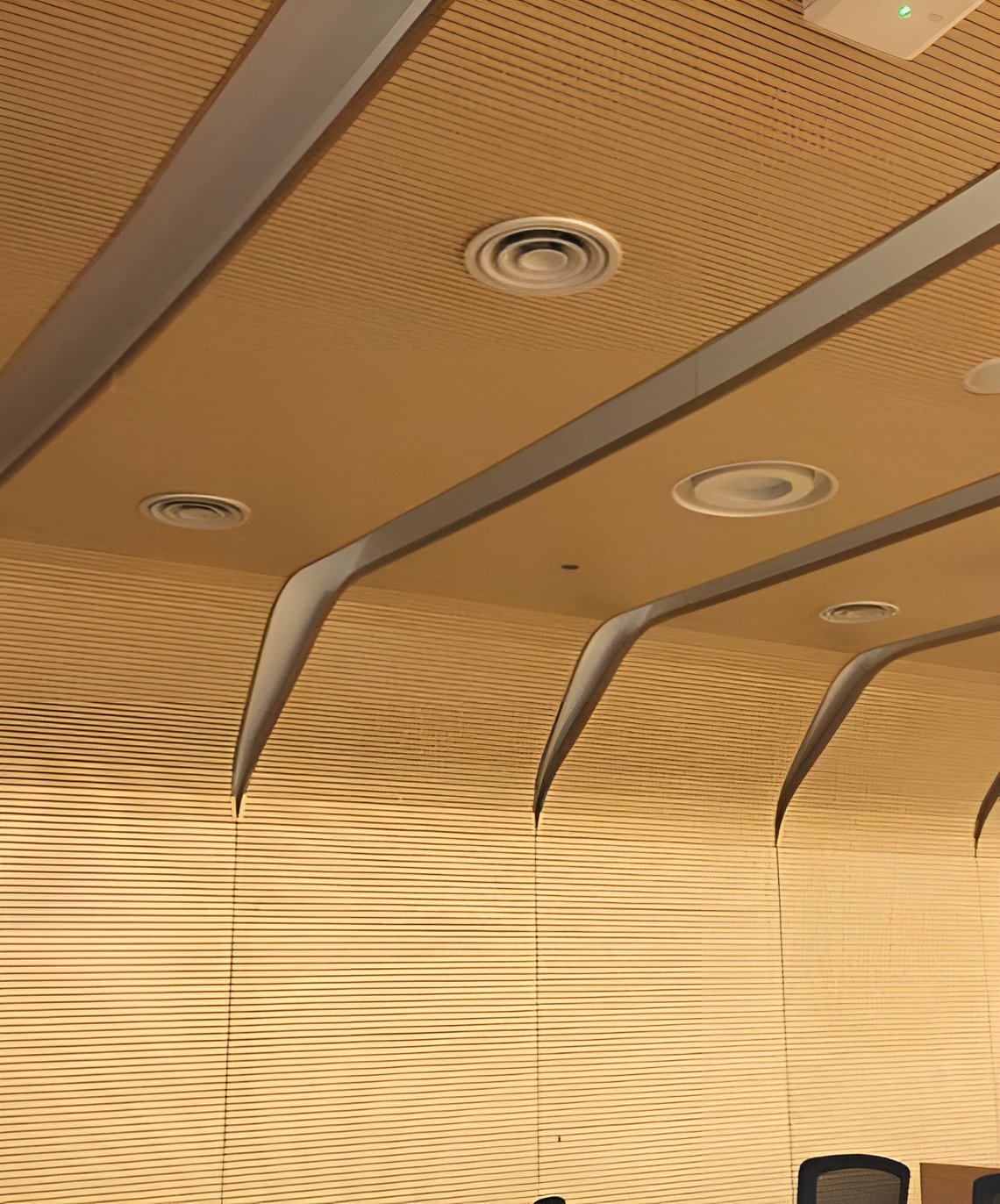
Wooden ceilings: warm, modern and acoustic
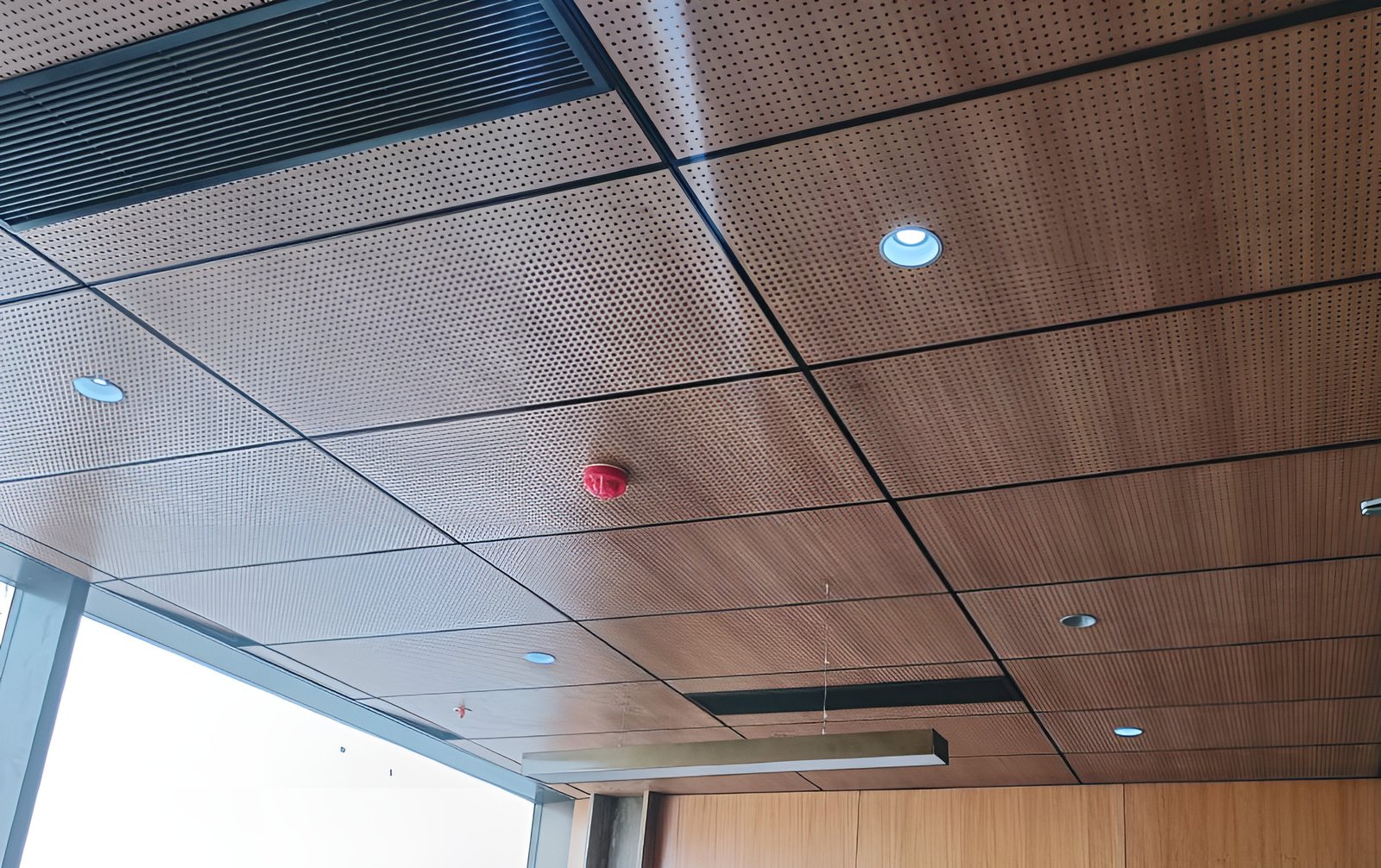
A wooden ceiling is one of the quickest ways to lift a commercial interior, and it is also the biggest untreated surface in most rooms. Bollard wooden ceilings use a 24 mm grid frame for channeled planks, or concealed fixing for tiles, in the same 192 x 2440 x 15 mm and 600 x 600 or 300 x 1200 mm sizes as the wall range.
Perforated tiles keep a clean, monolithic look overhead and let sound through to the absorbent layer above. They also leave room for lights, sprinklers and air vents to sit neatly in the grid. If you are weighing wood against other ceiling options, our acoustic ceiling panels guide compares them side by side, and our baffle ceiling systems are worth a look if you want wood-finish linear blades instead of a full ceiling.
Where to use wooden acoustic panels
Wood suits spaces where people talk, meet or relax and where appearance matters. These are the application areas listed for the Wood Works range:
In a boardroom, put channeled panels on the wall behind the speaker and a wooden ceiling above the table. In a lecture hall, cover the rear and side walls with 0.85 NRC channeled panels so the back rows hear clearly. In a reception or bank, perforated wooden tiles give a calm, formal finish and keep conversations private. For busy open floors, pair wood with PET panels or soft ceiling clouds for extra absorption.
Fire safety and moisture resistance
Commercial interiors need materials that meet fire requirements. Bollard wooden panels carry a Class 2 fire classification as per BS 476 Part 7. A moisture-resistant HDF core is available on request, which is useful in humid regions, near entrances and in wellness areas. You can view our quality credentials on the certificates page.
If your project has the strictest fire or eco requirements, you may also want to look at our natural, fire-resistant wood wool panels as an alternative to laminate-faced boards.
Wood vs other acoustic materials
| Material | Look | Best suited to |
|---|---|---|
| Wood Works | Warm woodgrain laminate, channeled or perforated | Boardrooms, auditoriums, lounges, premium interiors |
| PET Panels | Solid colours and carved patterns | Offices, schools, feature walls |
| Wood Wool | Natural textured wood fibre | Lobbies, cafés, eco-focused projects |
| Mineral Fiber Tiles | Classic ceiling tile | Large-area office and classroom ceilings |
| Phonic Fiber | Soft fabric-faced finish | Very loud halls, up to NRC 0.9 |
Wooden acoustic panel price in India: what affects the cost?
If you search for wooden acoustic panel price per sq ft, the numbers vary widely because the final cost depends on how the system is built:
- Format: channeled planks and perforated tiles are priced differently.
- Pattern and perforation: G13, G21, G28, custom grooves, or 2, 4 or 6 mm perforation.
- Core and backing: standard board vs moisture-resistant HDF, and whether 50 mm glass wool is added for NRC 0.85.
- Finish: the chosen laminate and any custom colour matching.
- Area and installation: wall keel profile or ceiling grid, height of work and total quantity.
Bollard manufactures in a fully automated 1.5 lakh sq. ft. facility in Bahadurgarh, Haryana, and works with architects from acoustic calculation through to site handover. Custom sizes and patterns are available. Find a partner near you on our dealers page.
Frequently asked questions
Do wooden panels really absorb sound?
Yes, when they are built as acoustic panels. Grooves or perforations in the face let sound reach an absorbent layer behind. Bollard wooden panels are rated at NRC 0.6, and channeled panels reach 0.85 with 50 mm glass wool behind them.
What sizes do wooden acoustic panels come in?
Channeled wood works come in 192 x 2440 x 15 mm or custom sizes. Wall and ceiling tiles come in 600 x 600 mm and 300 x 1200 mm, with 2 mm, 4 mm or 6 mm perforation.
Are wooden acoustic panels fire safe?
Bollard wooden panels are Class 2 fire classified as per BS 476 Part 7, which suits commercial and institutional interiors.
Can wooden panels be used in humid areas?
A moisture-resistant HDF core is available on request for areas with higher humidity.
Can I use wooden panels on both walls and ceilings?
Yes. The same channeled and tile formats are available as wall panel systems and as ceiling systems, so you can carry one look across the whole room.
What is the price of wooden acoustic panels in India?
It depends on format, pattern, core, finish, area and installation. Share your room size or drawings with Bollard for an exact quote.
Want warm wood and a quieter room?
Share your layout and our team will recommend the right format, NRC, finish and quantity for your project.